
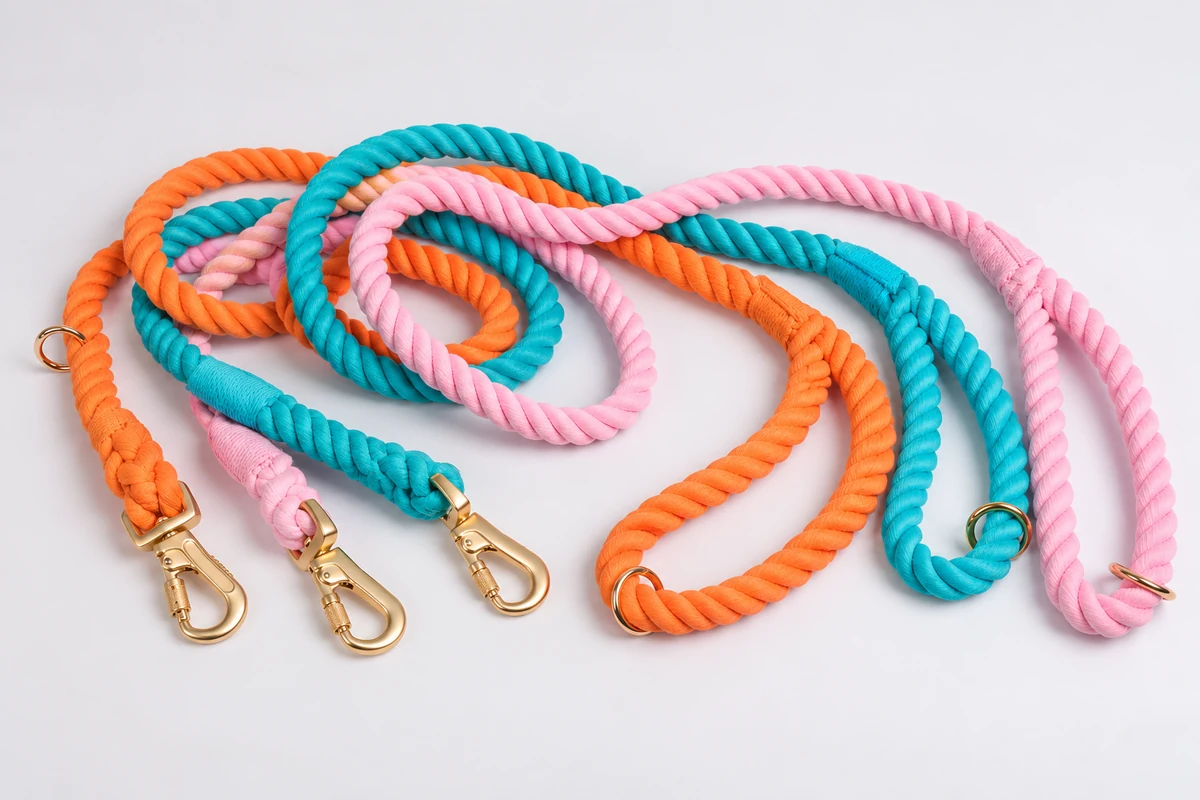
Start your first private-label dog leash order with a clear use case and one main leash construction. Then confirm the material, dimensions, colors, quantity, branding and packaging together before approving a sample for production.
You do not need a finished technical drawing to begin. A reference photo, an estimated quantity and an explanation of what you want to sell can start the discussion. This guide helps you turn those starting points into a brief that a factory can quote.
What Does a Private-Label Order Include?
A private-label dog leash is made or customized for sale under your brand. Depending on the product, your choices may include the leash construction, colors, logo, labels and packaging. Choosing a brand name alone does not define the finished product.
It helps to separate three different requests when contacting a factory:
| Request | What it helps you do | What to confirm with WiseLeash |
|---|---|---|
| Physical sample | Review an existing construction or your proposed custom design. | Existing and custom samples are quoted per project; shipping is separate. |
| Small trial order | Start with a limited quantity if the project is accepted. | A 10-piece trial needs approval, may have a higher unit price and depends on available capacity. |
| Standard production order | Produce the agreed product using the approved reference. | Standard MOQ is 50 pieces; the applicable minimum depends on the style, colors and customization. |
A sample helps you decide what to manufacture. A trial order is a separate quantity request, so ask which route fits your project.
Start with One Clear Product Brief
Begin with the person buying the finished leash and the setting in which it will be used. An everyday walking range, a running accessory and a long training line call for different product choices. Your sales channel also matters: tell us whether you are planning store display, online sales or promotional distribution.
For a first range, consider one main construction and a small number of variations you can explain clearly. You can browse our dog leash collections to identify a starting point. Choose the features that define your product before adding optional details.
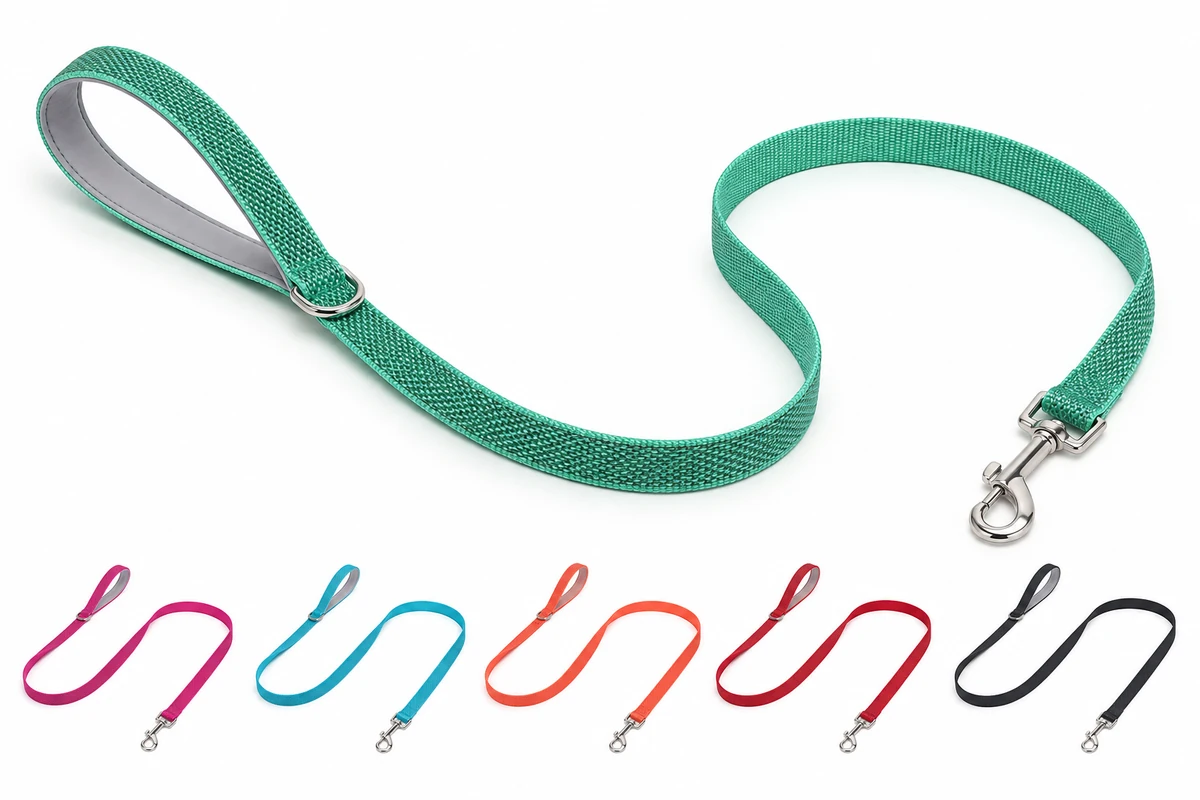
For example, if color is the main difference between two proposed versions, keep the other specifications consistent while comparing them. This gives you a clearer basis for discussing each version's quantity and price.
Choose the Details That Define Your Product
Build your brief around four groups of decisions:
- Construction and dimensions: State the leash type, preferred length and webbing width or rope diameter. Identify the handle arrangement and any adjustment you need. If you are unsure, send a reference and describe what you like about it.
- Material and fittings: Describe your preferred material, feel and hook or ring arrangement. A photograph can guide the discussion, but the material and component specifications still need confirmation.
- Brand presentation: Share your logo artwork, preferred position and colors. Printing, woven labels, embroidery and hardware marking are available for suitable products; the material, artwork and quantity affect which method fits.
- Packaging: Identify whether you need a bag, hangtag, card or box, and what information should appear on it. Ask for the proposed packaging to be included in the quotation.
For retractable leashes, distinguish customization of an available model from a new case design. New molds require a separate development assessment and a much higher minimum quantity; they do not fall under the standard 50-piece starting point.
Plan Quantity by Style and Color
Write down the quantity for each proposed version, alongside the total. A request for 50 leashes in one configuration is different from a request for five colors at 10 pieces each. The second request does not automatically qualify just because the total is also 50.
At WiseLeash, we confirm the minimum against the actual combination of style, color, material, branding and packaging. Some choices require more than the standard quantity. Do not assume either that every color must be ordered in 50 pieces or that all colors can be combined to reach 50; ask us to confirm the breakdown you want.
If the proposed combination exceeds your launch budget, compare a version with fewer colors or a different branding or packaging option. Ask for the revised specifications and price together. A lower price is only useful if you understand what changed.
Confirm the Quote and Plan Back from Delivery
Check what the quotation includes before comparing totals. Review the product specifications and quantity, logo work, labels and packaging, sample charges, and shipping arrangements. Ask whether any separate development or requested testing costs apply. Confirm the price again if you change the approved brief.
Our design support and 3D previews are free. Existing and custom physical samples are quoted per project, with shipping charged separately. The full sample fee is credited against your bulk order; sample freight remains separate.
Treat your requested arrival date as the end of several stages:
- Design and sample arrangements: Confirm the specifications, artwork, sample quotation and shipping arrangements before sample production begins.
- Sample production and review: Sample production usually takes 5–7 days after those confirmations. Allow additional time for shipping, your review and any agreed revisions.
- Bulk production: Production usually takes 15–25 days after the production reference and order arrangements are confirmed. The final schedule depends on specifications, quantity, materials and capacity.
- Delivery: Shipping time is additional and depends on the destination and agreed transport method.
Share your delivery country, postcode and target arrival date early. The factory can then review a project schedule with you before you commit to a launch date.
Approve the Physical Sample Before Production
Use the sample to check that the proposed product matches your brief. Review its dimensions, material and color, handle, fittings, logo placement and agreed packaging. Compare the details with the written specification, and record anything that needs changing.
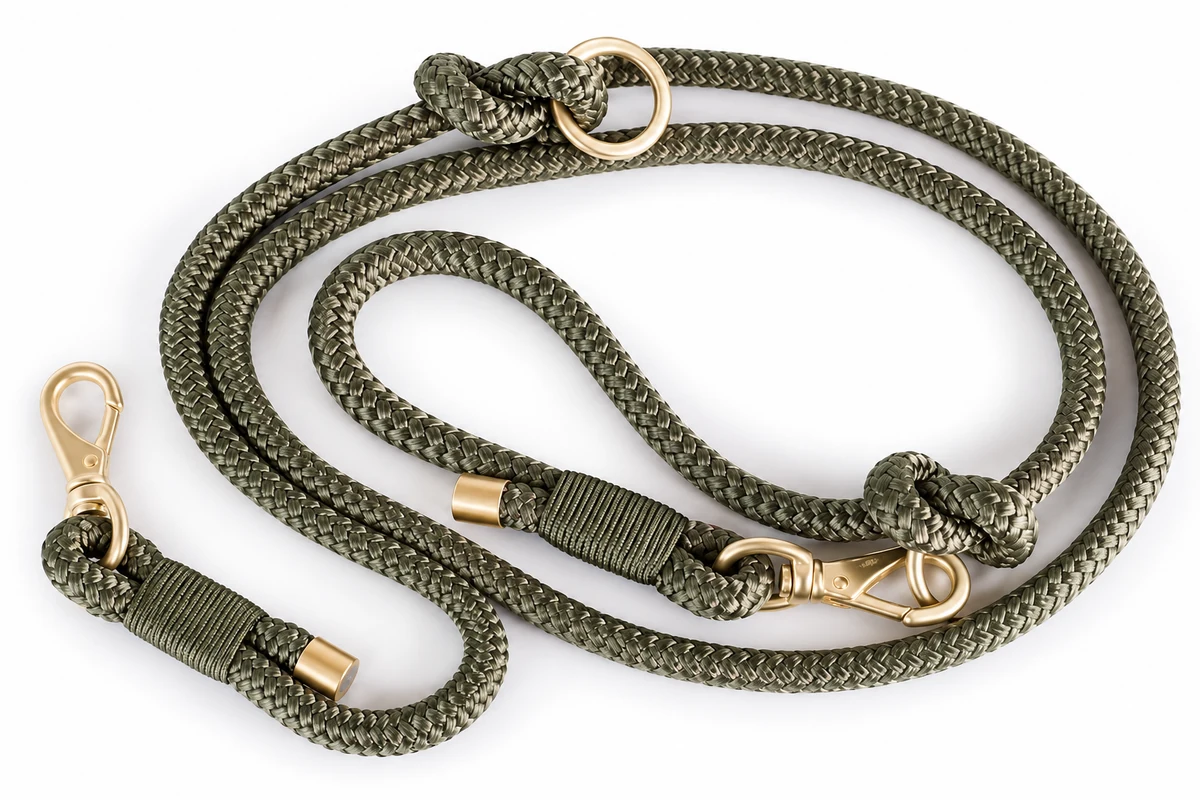
A photograph or a neat-looking seam does not establish a product's strength or performance. If your project requires particular tests or documented results, agree on the requirement and method before production. Keep those requirements separate from an appearance check.
Approve the final sample and written details together. If revisions are needed, confirm their scope, cost and schedule before proceeding. Our sample development page explains how we move from your reference or idea to a physical sample.
Prepare Your First-Order Inquiry
You can copy the checklist below into your inquiry. Fill in what you know and mark undecided details as “to discuss.” You can still contact us if you only have a photo, a preferred leash type and an estimated quantity.
- Brand and sales channel: Your brand name and where you plan to sell.
- Intended use: The situation or customer need your leash should serve.
- Leash type or reference: Your preferred construction, photo, sketch or description.
- Material and dimensions: Preferred material, length, and width or rope diameter.
- Handle and fittings: Any preferences for handles, hooks, rings or adjustments.
- Colors and quantities: Each proposed version and its quantity, plus the total.
- Logo: Artwork, preferred position, colors and any preferred application method.
- Labels and packaging: Pack format and the information you want included.
- Sample and testing needs: What you need to review or verify before production.
- Delivery and open questions: Country, postcode, target arrival date and decisions you would like help with.
With these details, we can discuss the feasible combination, identify what remains to be confirmed and prepare the next steps for your quotation and sample.
Key Takeaways
- Start with a clear use case and a manageable product range.
- Confirm quantities by version; the standard 50-piece MOQ has project-specific conditions.
- Budget and schedule for samples, review, production and shipping separately.
- Approve the physical sample and written specifications before bulk production.
First-Order Questions
Related Resources
- Explore the dog leash collections to choose a starting construction.
- Review sample development for design, sample fees and approval steps.
- See how production works after the sample and specifications are confirmed.
Send your reference, estimated quantity and delivery destination. Tell us which details you have chosen and where you need help, and we will work through the quotation and sample requirements with you.
Discuss Your First Order