
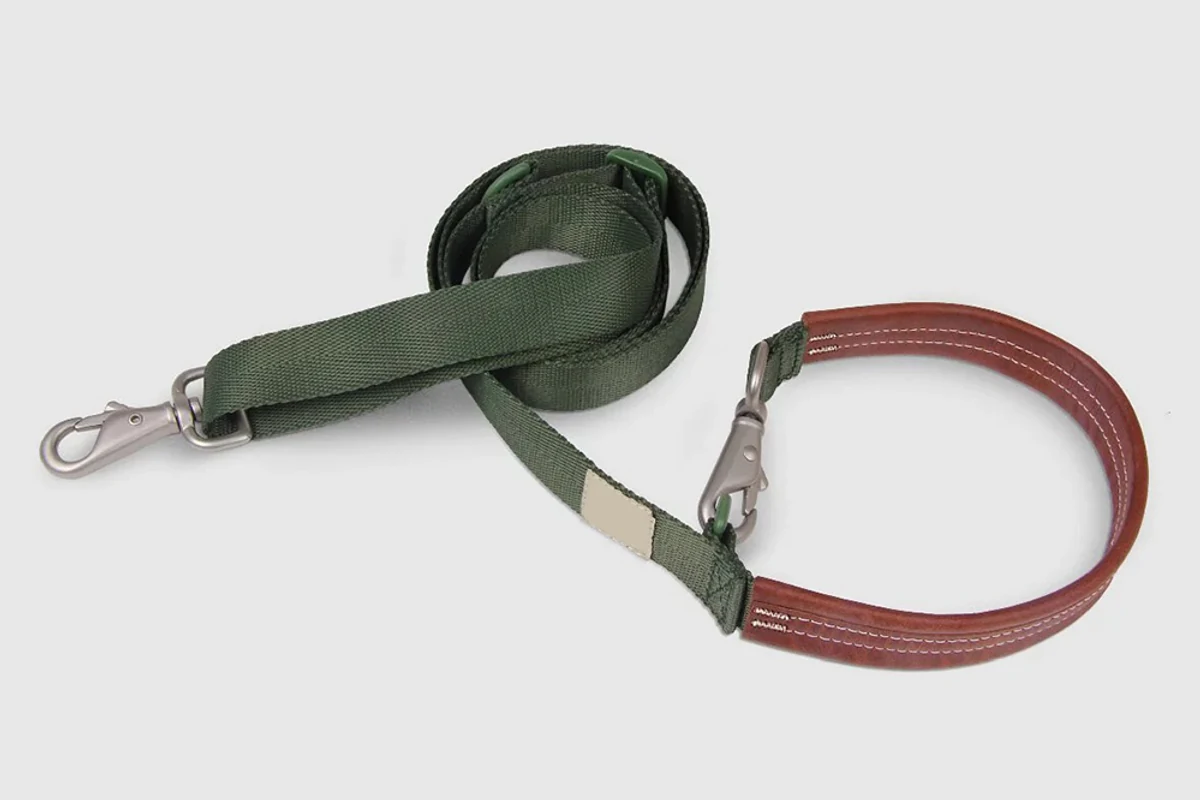
Choose rope when a rounded profile and visible rope texture are central to your range. Start with flat webbing when you want a broad surface for repeated artwork or a strap-based design. Neither shape is automatically stronger or more comfortable: the fiber, dimensions, handle, connections and hardware still need to be specified.
For a private-label project, the useful question is which construction supports your product brief. This guide compares the decisions that change the finished leash, so you can request a meaningful sample instead of choosing from a photograph alone.
Rope and Webbing Describe the Shape, Not the Fiber
A rope leash has a rounded cord body. A flat webbing leash uses a woven strap. Nylon is a fiber, so a nylon leash can be made in either form. Likewise, seeing a rope texture does not tell you whether the material is nylon, polyester or polypropylene.
Manufacturers distinguish these specifications too: Samson lists rope construction and fiber separately, while Bally Ribbon Mills describes webbing in multiple fibers and constructions. These references explain the terms; they do not identify the material in a particular product photograph.
When asking for a quote, name both the construction and the material. For example, “round nylon rope” is more specific than “rope,” while “flat polyester webbing” is more specific than “nylon-style leash.” Confirm the fiber in writing if it matters to your product description.
| Decision | Rope leash | Flat webbing leash |
|---|---|---|
| Body dimensions | Specify rope diameter and finished leash length. | Specify strap width, thickness and finished length. |
| Visual identity | Rope texture, color combinations and end finishes shape the look. | Strap color, patterns and repeated artwork shape the look. |
| Branding area | Discuss a label, handle detail, hardware engraving or packaging. | Discuss printing on the strap, a woven label or suitable handle branding. |
| Handle design | Review loop size, rope feel and any separate grip or padding. | Review loop size, strap edges, seams and any lining or padding. |
| Retail presentation | Check the coiled product in the proposed pack. | Check the folded or rolled product in the proposed pack. |
| Performance evidence | Confirm the specified rope and complete assembly. | Confirm the specified webbing and complete assembly. |
The table describes design choices, not a performance ranking. Two products with the same shape can have different fibers, constructions and fittings.
Compare the Handle, Not Just the Leash Body
The part a customer holds deserves its own specification. A rounded rope body may suit the visual style you want, but its surface texture, flexibility and loop size still affect how the handle feels. A flat strap may have a plain, doubled or padded handle; the edge finish and the position of the seams also matter.
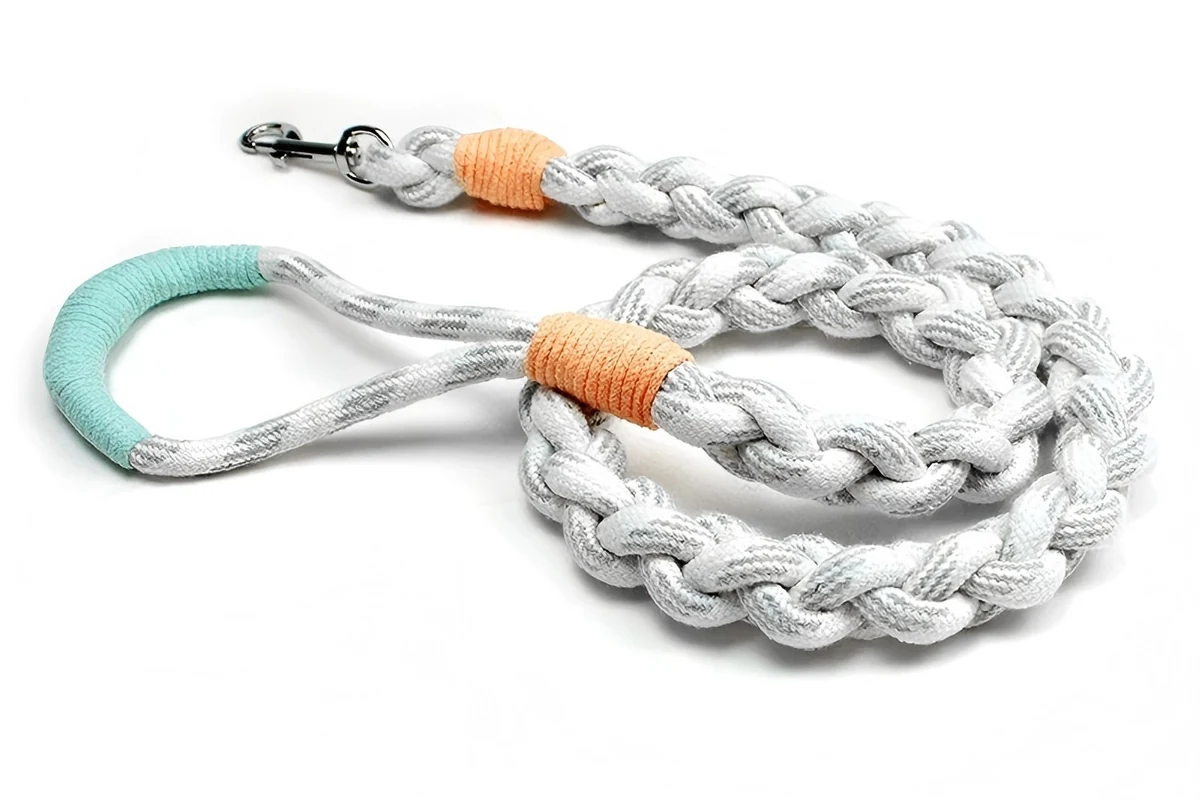
Review two physical samples with the same finished length and comparable hardware where possible. Hold the handles, check the lining and seams, and compare how each product folds or coils. Note what you want changed rather than approving “soft” or “comfortable” without a reference.
If you want a padded handle on either construction, specify its material, coverage and position. Padding is a design detail to confirm, not a property guaranteed by choosing rope or webbing.
Match the Construction to Your Branding
Flat webbing provides a continuous face for a repeating logo, pattern or color design. The result still depends on the chosen fiber, surface, print process, artwork size and placement. Ask to see the artwork on the actual strap width; a large screen preview can hide lettering that becomes too small on the product.
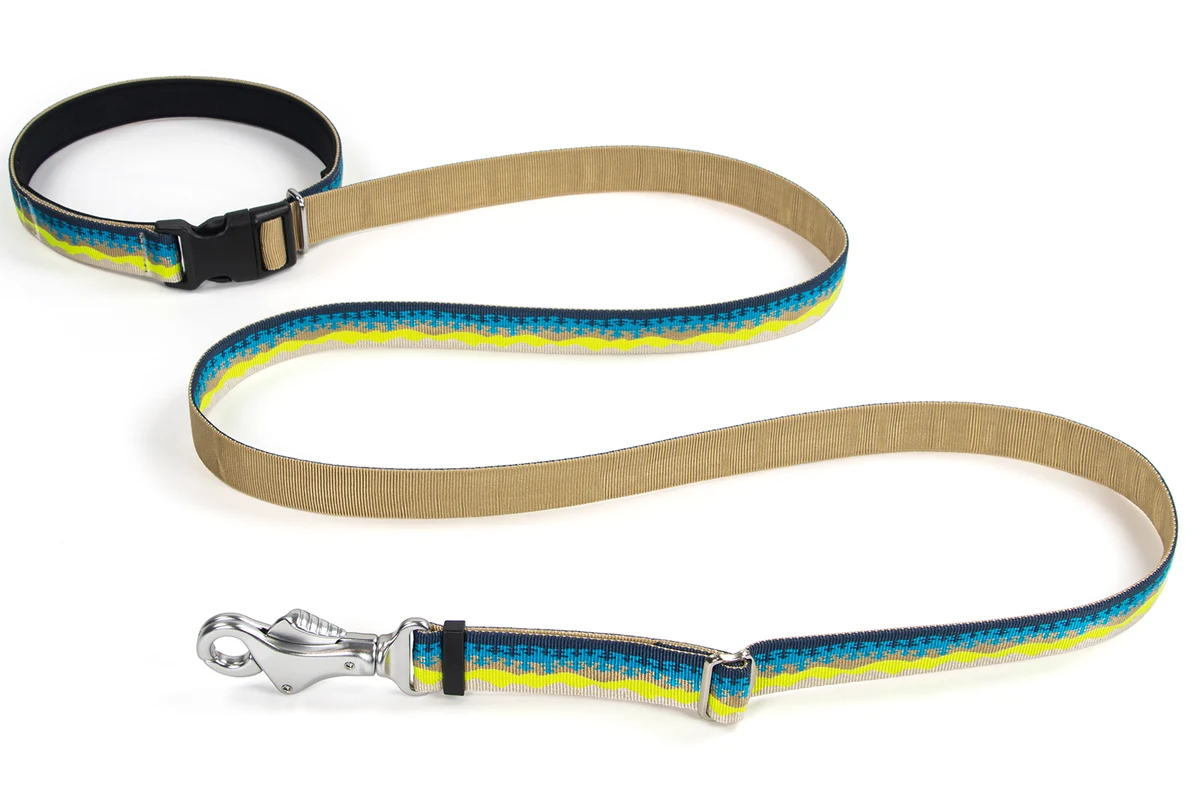
With rope, the body itself can provide the main visual identity. Color combinations, visible texture and end finishes can carry the design, while a label, handle detail, hangtag or suitable metal component carries the brand name. Our custom rope leash collection shows the customization areas to discuss.
For a pattern-led range, start the conversation with our nylon and polyester webbing leash options. For either construction, confirm the available branding method and its quantity requirements before treating the mockup as a production specification.
Choose Around the Product You Want to Sell
A range built around rope texture: Start with rope if the rounded body, twist or braid pattern and coordinated finishes are the main reasons someone would choose the design. Approve the rope and the handle together; a photo of the body alone leaves important details unresolved.
A range built around printed artwork: Start with flat webbing if a repeated graphic or clearly positioned logo is central to the product. Check which face is printed, how the design meets the handle and hardware, and whether folds hide key branding in the retail pack.
A product built around a specific function: Begin with that function. A training line, a hands-free layout or a coated easy-clean product needs its own specification. “Rope” and “webbing” alone do not establish those features. Our training leash collection is a separate starting point for longer-line projects.
If the choice remains unclear, request one rope proposal and one webbing proposal against the same brief. Compare the differences you would explain to a buyer, rather than adding two nearly identical products just to offer both shapes.
Compare Like-for-Like Quotes and Packaging
There is no useful universal rule that rope is cheaper than webbing, or the reverse. A quote changes with the material, dimensions, construction, fittings, branding, quantity and packaging. A simple rope product and a padded, printed webbing product are not a controlled comparison.
Ask each proposal to identify the finished length, body specification, handle, hook, rings, branding and pack format. Keep shared details the same where possible, and ask which changes account for a price difference. Compare the packed product as well: a different coil or fold can change how it fits a card, bag or box.
At WiseLeash, standard MOQ is 50 pieces, with the applicable style, color and process combination confirmed per project. Do not assume a mixed rope-and-webbing range can share one minimum. Existing and custom physical samples are quoted per project, with shipping separate; our sample development page explains the process.
Confirm the Whole Assembly Before Making Claims
Diameter and width are not strength ratings. A thicker-looking body or larger hook does not, by itself, establish what the finished leash can withstand. Specify the body material and construction, the handle connection, the hook attachment and the actual hardware rather than relying on a category name.
Intertek’s explanation of leash strength includes the hook connection and handle stitching as potential weak points. For a buying decision, this supports checking the complete assembly rather than treating a material specification as a finished-product rating.
For a product claim, agree the required evaluation of the finished leash and the conditions it must cover. A material data sheet can inform that discussion, but it does not establish a rating for a leash assembled with different seams, terminations and fittings. Do not convert a rope breaking-strength figure directly into a dog-weight recommendation.
Use the physical sample to settle appearance, dimensions, handling and component placement. Keep that review separate from any agreed performance testing. Record the approved construction so the production reference includes more than the color and overall shape.
Turn the Comparison into a Sample Brief
Once you have a preference, send a short brief with the following details:
- The intended range and why rope or flat webbing fits it.
- The proposed fiber, finished length and rope diameter or webbing width and thickness.
- The handle, hook, rings, artwork or label placement, colors and packaging.
- The quantity by version, delivery destination and any performance requirements to confirm.
If one detail is undecided, mark it as a question. For example, ask for two handle options while keeping the rest of the design fixed. That makes the next sample comparison easier to interpret. For the broader ordering sequence, see our first private-label leash order guide.
Key Takeaways
- Rope and webbing describe construction; confirm the fiber separately.
- Choose around the design and branding surface your range needs.
- Compare complete samples and equivalent quote specifications.
- Confirm performance requirements for the finished leash instead of judging by shape alone.
Rope and Webbing Questions
Related Resources
- Custom Rope Dog Leashes — explore rope materials, handle details and branding options.
- Custom Nylon Dog Leashes — discuss nylon or polyester webbing, dimensions and artwork.
- Sample Development — move from a design proposal to a physical reference.
- Plan Your First Private-Label Dog Leash Order — prepare the wider order brief and quotation details.
Send your reference images, artwork and estimated quantities. Tell us which details matter most, and we can discuss the construction and sample options for your project.
Discuss Your Leash Design