
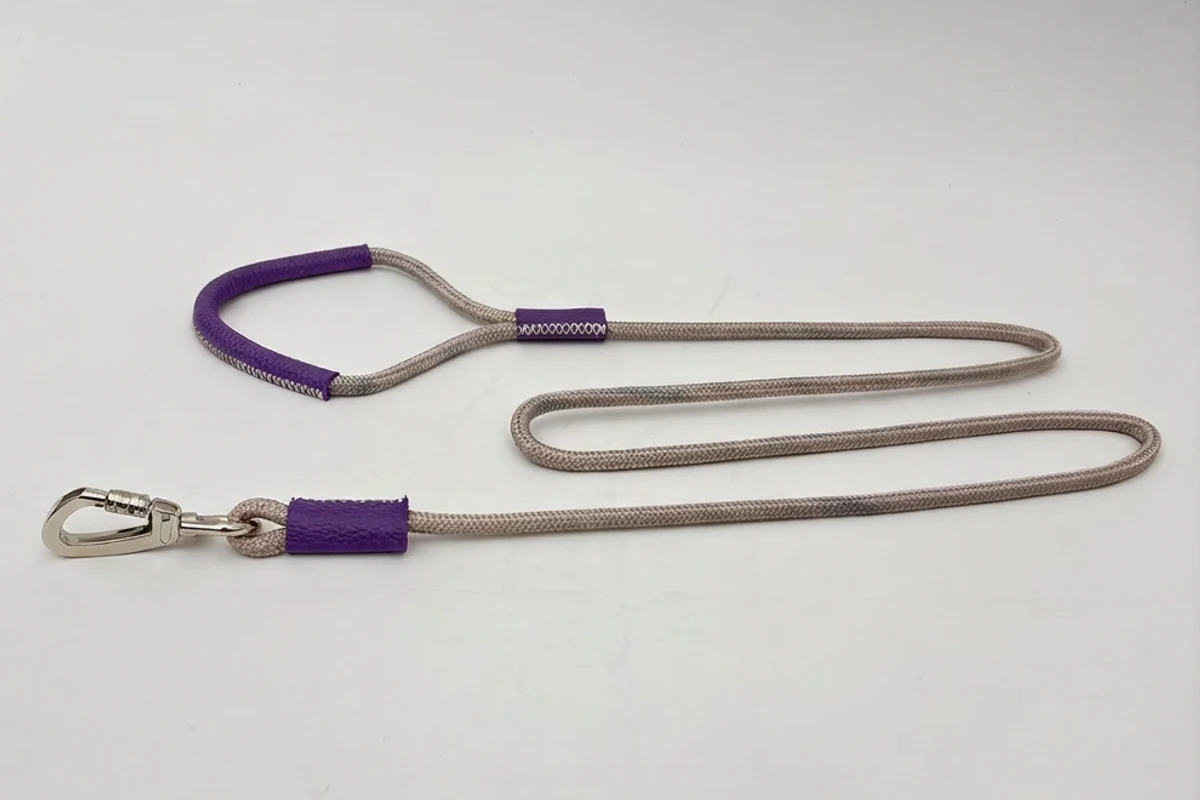
Approve a custom dog leash sample by checking it against the agreed specification, recording any differences and confirming exactly which version should guide production. A message saying “looks good” leaves too much undecided if the length, hook, logo file or packaging has changed during development.
Keep the sample, written requirements and your review notes together. The checklist below helps you inspect the details a buyer can review directly and identify anything that needs additional evidence before approval.
Start with the Correct Sample and Specification
First confirm what you received. An existing reference sample may show construction or workmanship without matching your final colors, logo or packaging. A custom sample should be reviewed against the version agreed for that sample. List any intentional substitutions so they are not accidentally approved for production.
Give the sample a reference or version number. Put the matching specification, artwork and packaging files beside it, and use the same references in your feedback. If an important requirement is missing, resolve it before judging the sample against an assumption.
| Check area | Compare against | Record in your review |
|---|---|---|
| Dimensions | Agreed length, width or rope diameter, and measurement method. | Measured result and any difference from the specification. |
| Material and color | Named material, finish and agreed physical color reference. | What matches visually and which material details need confirmation. |
| Handles and connections | Handle layout, lining, seams, wraps and attachment positions. | Location and photo of any construction or workmanship issue. |
| Hardware and adjustment | Specified hook, rings, buckles and adjustment arrangement. | Component identity, visible condition and basic operation. |
| Branding | Approved artwork revision, size, method and position. | Legibility, orientation, color and placement differences. |
| Packaging | Agreed bag, card, tag or box and its printed information. | Pack fit, layout, included items and missing details. |
| Required performance evidence | The evaluation and acceptance criteria agreed for the project. | Report reference or an open item awaiting confirmation. |
Use simple outcomes such as “matches,” “revise” and “not yet confirmed.” A blank cell should not be interpreted as approval.
Measure the Leash and Check the Materials
Agree where a measurement starts and ends. For finished length, specify whether the hook and handle are included and how adjustable sections are set. For elastic constructions, distinguish the relaxed measurement from any separately defined extended measurement. Do not stretch a sample by hand and treat the result as a controlled test.
Record the actual measurement and the specified value. If no tolerance has been agreed, ask for one instead of inventing a pass/fail limit. A measurement photo should show both the reference points and the reading, with the same setup used for later comparisons.
Compare color, texture, surface finish and handle lining with the approved references. Use consistent lighting for the comparison; a phone photo or screen can help communicate a difference but should not become the only color reference. Confirm the material description separately because appearance alone cannot establish the fiber, coating or grade.
Inspect Handles, Connections and Hardware
Follow the leash from the handle to the hook. Look at seams, folded sections, wraps and component attachments. Record the exact position of loose threads, uneven finishing, exposed edges or parts that differ from the brief. A close-up photo is more useful when paired with a wider view showing where the issue sits.
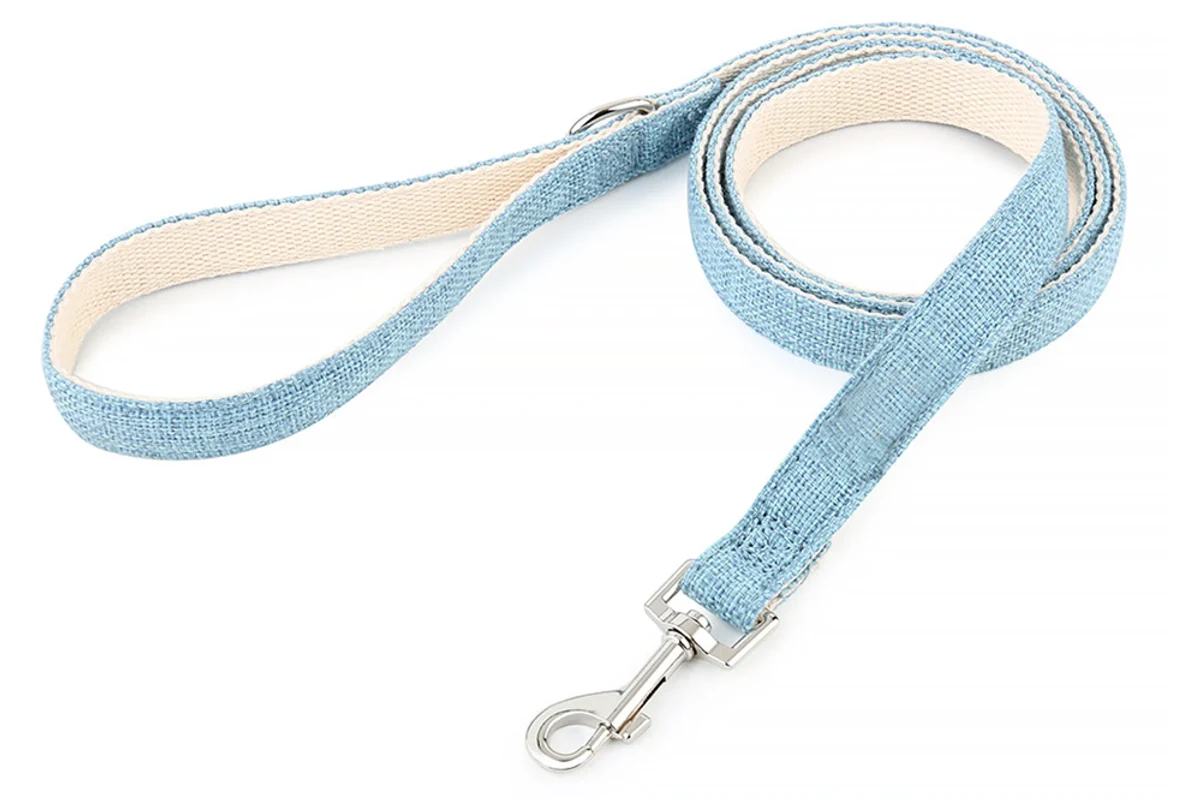
Operate clips, buckles and adjusters as intended, without applying an improvised load. Check whether parts open, close and move as expected, whether the selected components match the specification, and whether the adjustment arrangement matches the design. These observations check basic operation; they do not establish a strength rating.
Review the handle as an assembled part. Check its opening, lining and seam positions, including where the hand contacts it. If you want a different feel, identify the change to discuss, such as lining coverage or handle size, rather than asking only for “better quality.”
Review the Logo, Labels and Packaging
Check the logo on the actual product at its finished size. Compare the artwork revision, spelling, dimensions, colors, orientation and distance from a seam or fitting. Confirm which face is branded and how a repeated design ends near attachments. Our logo method guide covers the different details to review for print, labels, stitching and metal marking.
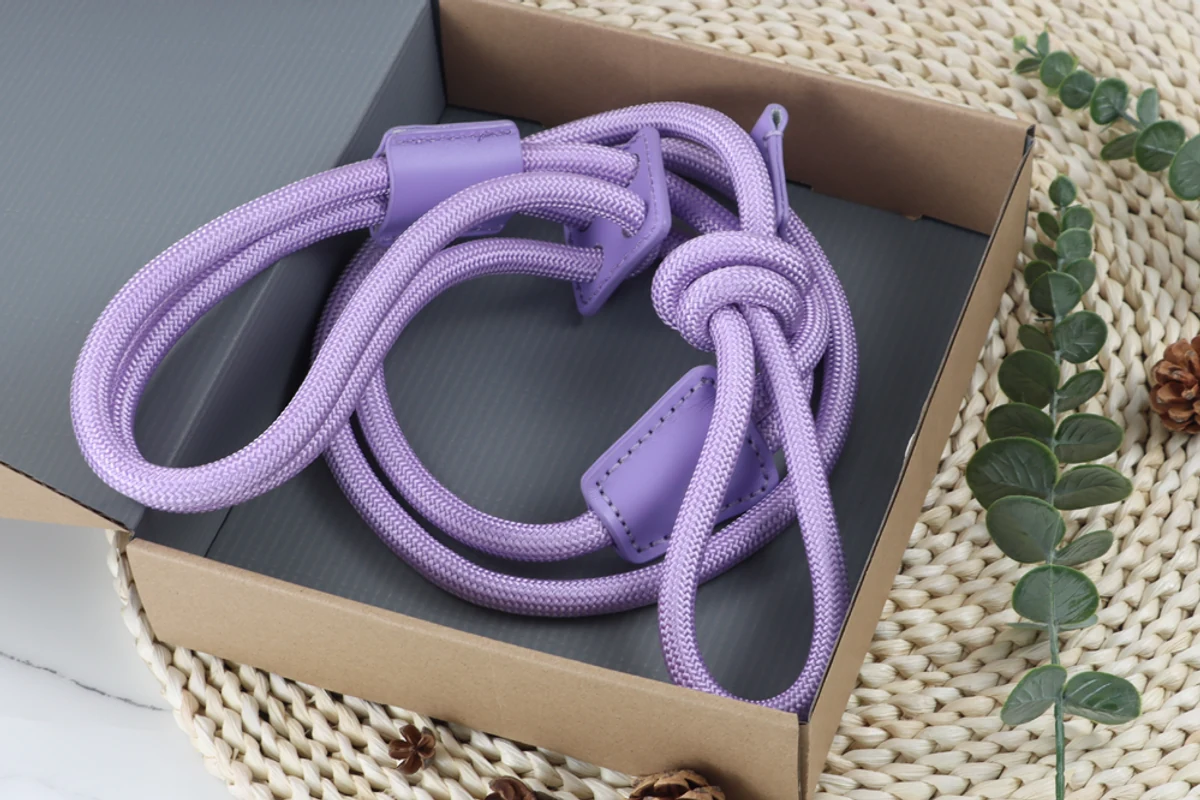
Pack the leash in the proposed retail format if it was included in the sample scope. Review how it folds or coils, whether the pack fits and what a buyer sees when it is closed. Check the agreed tag, label, artwork and included items together. If final packaging was not supplied, keep packaging approval open instead of assuming the shipment bag is the retail reference.
Where a barcode or item identifier is part of the project, compare it with the file you supplied and arrange the required reading or verification check. A clear-looking printed code does not by itself confirm that it works in the intended system. Keep packaging content and product approval linked to their own file versions.
Separate Sample Review from Performance Testing
A visual review can find mismatched parts, unclear branding or an incorrect dimension. It cannot establish breaking strength, resistance to wear or the suitability of a product claim. Identify which requirements need a defined evaluation, and agree the method, conditions, acceptance criteria and relevant sample configuration before relying on a result.
Intertek’s explanation of leash strength includes the hook connection and handle stitching as possible weak points. For sample approval, this supports assessing the finished assembly rather than treating a material description or a smooth-moving clip as proof of strength.
Ask whether any report applies to the actual construction, components and revision you are approving. If a hook, connection, material or decoration changes, confirm whether the existing evidence still applies. Keep unresolved performance requirements visible in the review record.
QIMA distinguishes pre-shipment inspection from laboratory testing, while describing checks against product requirements. The distinction also matters here: approving a design sample does not establish that every unit in a later production batch meets it.
The approved sample is a production reference, not a substitute for checks during manufacture or before dispatch. Our production process connects the agreed specification with material, process, finished-product and packing checks. Agree any additional inspection requirements for your order separately from the design approval.
Record Revisions and Confirm What Is Approved
Send one consolidated list of changes, with each point tied to a photo or specification item. Distinguish a mismatch from a new design preference: correcting the wrong logo orientation is different from choosing a new logo size after seeing the sample.
For example, an illustrative review note could read: “Handle lining matches the reference. Logo position needs revision: move it to the location shown in annotated photo B. Final retail card has not been reviewed.” This is clearer than approving the sample and placing an unrelated list of changes in a later message.
At WiseLeash, we confirm the revised scope, cost and schedule before making changes. Ask what evidence you will receive for each revision. A revised drawing or photograph may help with a visible layout change; a change to construction, material or handling may require another physical review. Agree the appropriate confirmation rather than assuming every change can be signed off from a photo.
Once the items required for the stated approval scope are resolved, identify the approved sample and document versions in writing. State any exclusions explicitly, such as packaging that remains pending. Ask the factory to confirm that it is working from the same references, and retain your approved sample and files for later comparison.
Send a Sample Approval Note
Use the following fields to make your feedback easy to act on. Replace the prompts with your own project information:
- Project and sample: Product name, sample reference or version, and date reviewed.
- Matching documents: Specification revision, artwork revision and packaging file revision.
- Review outcome: Approved for the stated scope, revisions required, or awaiting specified information.
- Confirmed details: The dimensions, construction, components, branding and packaging you have checked.
- Changes required: Each requested change, its reference photo and the confirmation needed afterward.
- Open items: Missing packaging, unconfirmed materials or required performance evidence.
- Next confirmation: Who will supply the updated reference and what you will review before closing the item.
Keep commercial details and the production schedule aligned with the final product version. A sample approval note should make the production reference clear; it does not replace confirmation of the order quantity, packaging quantities or delivery arrangements.
Key Takeaways
- Review the correct sample against one clearly identified specification.
- Record measurements, locations and photos instead of relying on “looks good.”
- Keep appearance and basic operation separate from performance evidence.
- Close revisions and identify the approved sample and file versions in writing.
Sample Approval Questions
Related Resources
- Sample Development — confirm sample scope, fees and revision arrangements.
- How Production Works — see the checks that follow approval of the product reference.
- Dog Leash Logo Methods — review artwork, placement and decoration details.
- Rope vs Flat Webbing Leashes — compare the construction choices behind your sample.
Send your leash reference, current specification and the details you want to confirm. We can discuss the sample scope and how to record changes before production approval.
Discuss Your Sample