
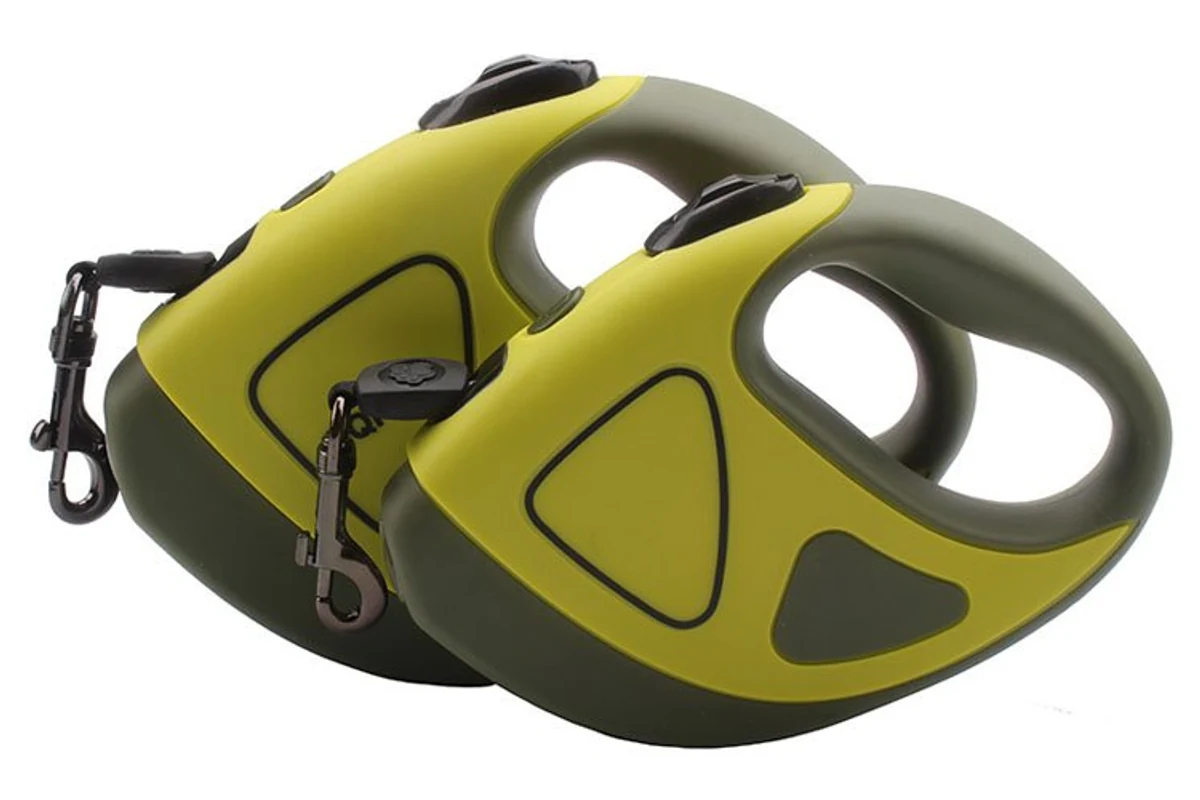
Start with an existing retractable leash model if its shape and operation already suit your product brief. Review compatible colors, branding, lead options and packaging around that model. Consider new mold development when a necessary change to the case or controls cannot be achieved with an available configuration.
The useful first question is not simply “Can you make it custom?” It is “Which parts need to change?” A new logo and a new handle shape create different development tasks. Separating them helps you request a realistic quotation and avoid applying an existing-model schedule to an unreviewed design.
Compare the Two Development Routes
An existing model gives the project a defined case and mechanism to assess. A new mold project introduces a tooling decision as well as a product decision. Neither route removes the need to approve the exact finished configuration.
| Decision | Existing model customization | New mold development |
|---|---|---|
| Starting point | An available case and compatible mechanism. | A proposed geometry that needs engineering and tooling review. |
| Main design scope | Supported colors, decoration, components and packaging. | Case shape or other molded features beyond the available options. |
| Compatibility | Confirm choices against the selected model. | Review how the changed parts fit and work with the assembly. |
| Quotation | Identify the model, customization, quantity and pack. | Add development, tooling, trial samples and revision scope. |
| Timing | Confirm sampling and production for the chosen configuration. | Establish a separate development plan before promising a launch date. |
| Approval | Review the customized physical sample and agreed evidence. | Distinguish concept review, prototypes and samples from the intended production process. |
For WiseLeash, the standard starting MOQ is 50 pieces for suitable existing case models. Color, printing and packaging choices may raise it. An entirely new mold needs a separate assessment and a minimum far above 50 pieces; the standard MOQ is not a new-tooling offer.
Define What Can Change on an Existing Model
Begin with a model reference and identify what should stay fixed. Review the case outline, handle opening, button positions and lead exit before selecting decoration. If those features suit the brief, the main work may be coordinating the exterior and retail presentation.
Our retractable leash collection includes case and button colors, compatible tape or cord choices, branding and packaging options. Available constructions include ABS cases and TPR soft-grip options. Confirm each combination for the selected model instead of assuming that every listed option can be combined.
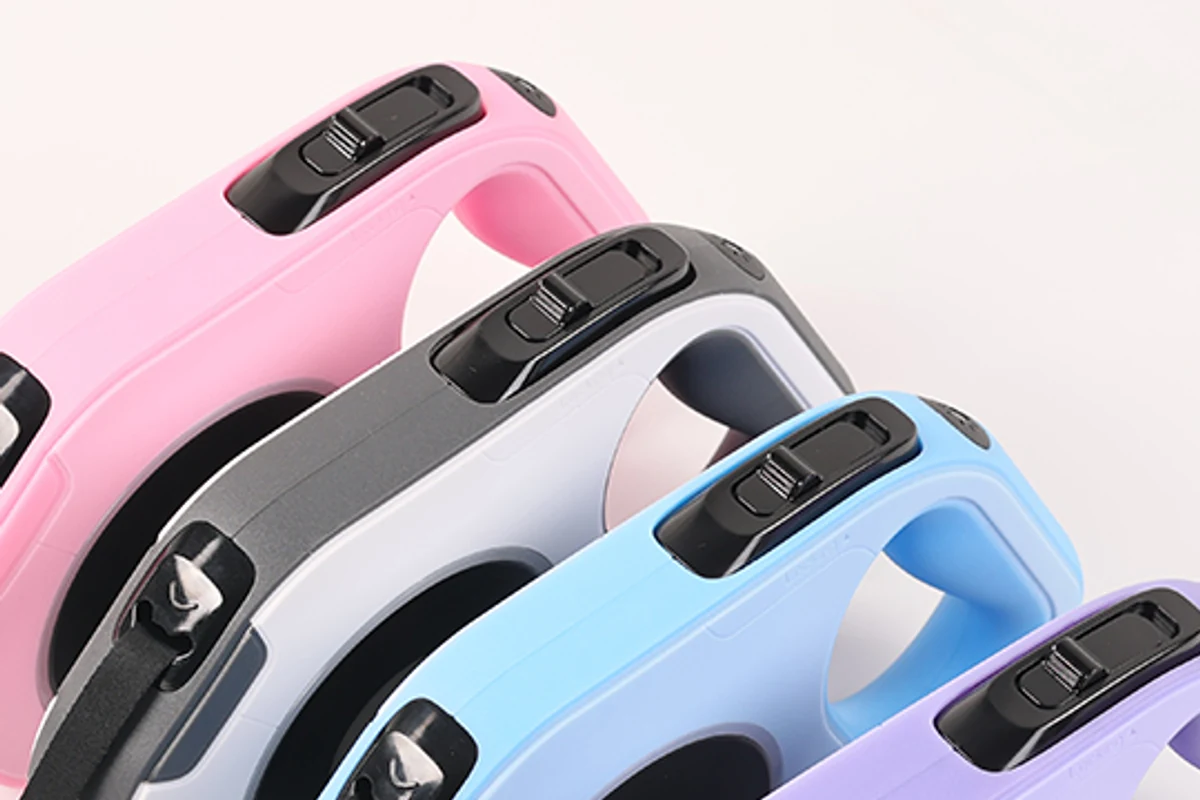
Treat 3 m, 5 m and 8 m as configuration choices to check, not interchangeable lengths for every case. Likewise, changing between tape and cord requires confirmation of the supported construction. An exterior photograph cannot establish the internal compatibility or the product's intended performance.
Branding also has boundaries. Ask for the printable area, artwork size and sample method on the chosen surface. Case graphics and packaging may achieve the visual distinction you want without changing the case geometry. The logo method guide can help you prepare the artwork questions.
Identify Changes That Need Engineering Review
A new handle opening, a different case outline or a relocated control should be raised as a design change, even if it appears small in a drawing. These requests can affect the space and connections used by other parts. Ask which existing components can remain and which would need to change.
Describe the problem you want to solve before specifying a new shape. For example, “We want a larger opening for a gloved hand” gives the development review a clear purpose. First check whether another existing model meets that requirement. If it does not, request an assessment of the proposed change.
Protolabs' guide to manufacturing analysis explains how injection-molding review considers features such as wall thickness, draft and undercuts. For a leash case project, the practical implication is to request a manufacturability review before treating the exterior drawing as a production-ready design.
The review should establish whether an available part, a change to existing tooling or a new tool is appropriate. A different-looking exterior does not by itself tell you how much tooling work is required.
Do not assume that a revised outer shell can use the original internal arrangement unchanged. Confirm the proposed assembly, materials and manufacturing approach together. A new case mold also does not automatically include redesigned buttons, grip components or internal parts; the development scope should identify them separately.
Compare the Full Cost and Schedule
Compare quotations for the same product brief and quantity. For an existing model, separate the unit price from sample charges, decoration setup, packaging and freight where applicable. For new tooling, ask which design work, tools, trial runs, samples and revisions are included, and which are quoted separately.
A useful planning calculation is: quoted one-time development costs divided by the number of units you reasonably expect to order, then added to the recurring unit cost. This is a budgeting comparison, not a factory quotation. Use more than one order-volume scenario, because an optimistic forecast can make a tooling proposal look cheaper than it will be for your actual launch.
Keep the schedule in stages. For a confirmed existing-model project, WiseLeash sampling usually takes 5–7 days after the design and sample arrangements are confirmed. Bulk production usually takes 15–25 days after the production reference and order arrangements are confirmed. These are typical project timings, not a combined delivery promise; shipping is separate.
New mold development needs its own schedule. Ask when design review, tooling, trial samples, revisions and production approval would occur. Build the launch plan around the confirmed milestones. Neither the existing-model sample window nor its production window should be presented as the full duration of a new mold project.
Give Each Sample Stage a Clear Purpose
A visual preview helps you review color, artwork and the proposed appearance. It does not show how the physical brake, lead or handle will behave. WiseLeash provides free design and 3D previews, but the agreed physical sample remains a separate step.
For a new design, ask what the proposed prototype can demonstrate. A model made to assess shape or hand fit may not contain the final mechanism or use the intended production material. Record those limitations so a useful appearance review is not mistaken for approval of the finished product.
Protolabs' overview of rapid prototyping processes distinguishes methods by material, process and what a prototype can demonstrate. Applied here, a shape model can support an early design discussion while leaving molded-part quality and the finished leash's operation to later, appropriate samples and evaluations.
When tooling is involved, identify the samples that will be made with the intended material and production process. Check which revision they represent and what remains open. Agree how changes will be confirmed before treating any sample as the production reference. Our sample approval checklist provides a record for those decisions.
Verify the Finished Retractable Unit
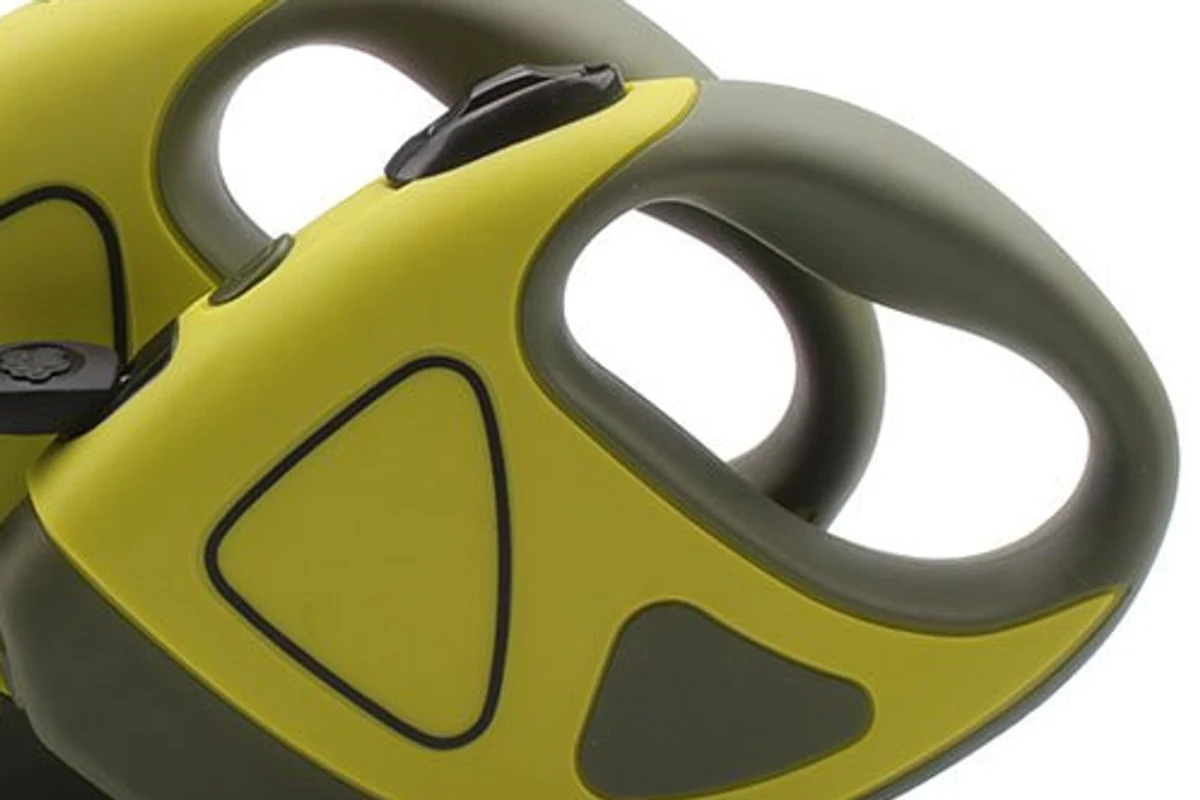
Review the assembled sample for grip access, control placement, extension, retraction and lock operation according to the model's instructions. Check the specified lead, hook, branding and pack together. Confirm that decoration does not obstruct controls or cover information required for the agreed product presentation.
Keep a basic operating review separate from performance evidence. A smooth-moving sample or a short demonstration does not establish a load rating, durability or suitability for a particular dog size. Agree the relevant evaluation, acceptance criteria and evidence for the exact configuration with the supplier.
If a case, lead, connection or mechanism changes, ask whether the existing evaluation still applies. Keep the model reference and sample revision connected to the supporting information. Approval of the design sample also leaves production checks to be completed; our production process explains the checks that follow the agreed reference.
Prepare a Brief That Makes the Route Clear
Send one brief that separates essential requirements from preferences. Include a reference photo, sketch or model number, and annotate the parts you want to change. A photo is a starting point for discussion; it does not confirm the construction hidden inside the case.
- Product starting point: The existing model you are considering, or the function and shape you need assessed.
- Required changes: Case geometry, grip, controls, lead format and length, with essential changes marked clearly.
- Brand presentation: Artwork, colors, decoration positions and retail packaging requirements.
- Commercial scope: Initial quantity, quantity by variant, expected reorders and the budget available for development.
- Review and delivery: Intended market, sample stages, required evidence and target dates, with freight considered separately.
Ask the quotation to state which route it covers. If the priority is brand appearance and an available model fits, review that configuration first. If a necessary functional or geometric change remains unresolved, complete the development assessment before committing to tooling or announcing the launch.
Key Takeaways
- Start with the exact change you need, then check suitable existing models.
- Confirm lead, grip and branding compatibility for one identified configuration.
- Give new tooling a separate scope, cost and development schedule.
- Use each preview or sample only for the decisions it can support.
Retractable Leash Development Questions
Related Resources
- Custom Retractable Dog Leashes — review the available customization topics and order conditions.
- Sample Development — understand previews, physical samples and sample arrangements.
- Dog Leash Sample Approval Checklist — record revisions and identify the production reference.
- Planning Your First Private-Label Order — organize quantities and the wider order brief.
Send your reference model or sketch, the changes you need and your estimated quantity. We can review suitable existing options or discuss the scope of a separate development assessment.
Review Your Project